Sealing problems in a reduction cell usually build over time. Heat, thermal expansion, metal movement, and corrosive bath chemistry can gradually create gaps around cathode bars, collector bar windows, and refractory joints. Those spaces may seem minor, but they can let air reach carbon components, increasing oxidation and heat loss. Moldable refractories work well in these areas because they can fill uneven spaces and maintain close contact as the surrounding structure shifts during operation.
THERMOSEAL® Refractory Moldables for primary smelters
THERMOSEAL® Refractory Moldables from Mid-Mountain Materials, Inc. are designed for high-temperature sealing, insulation, and repair work in industrial environments, including primary aluminum production. Wet grades have a putty-like consistency made from refractory fibers, binders, and additives. Their workable texture ensures technicians can press, trowel, or pump material into areas where pre-formed refractory shapes are difficult to fit.
Applied around cathode bar penetrations, collector bar windows, refractory joints, and molten aluminum transfer areas, moldable refractories follow the contours of the surrounding structure. Depending on the formulation, THERMOSEAL® materials can be air-dried or force-dried after installation. Pumpable grades also reach enclosed cavities that are awkward to pack by hand. For potroom maintenance teams, that flexibility helps simplify sealing work without adding another custom rigid component to the repair.
Advantages of moldable refractories for primary aluminum smelting
1. Airtight conformability
Irregular openings are common around metalwork and penetrations, especially after repeated heating and cooling. Rigid refractory blocks can leave small voids when dimensions shift, giving air a route into the pot structure. Moldable refractories are easier to work into uneven spaces because the material can be packed closely around changing contours. Around cathode bar penetrations and collector bar windows, a tighter seal limits oxygen exposure, protects carbon components from oxidation, and reduces unwanted heat loss through poorly sealed joints. That close fit is valuable where tolerances vary from one cell to another.
2. Thermal shock resistance
Frequent temperature changes put refractory seals under strain throughout a cell campaign. Pot startup heats components from ambient conditions, anode changes disturb local heat patterns, and metal tapping can alter temperatures around nearby working areas. Materials that respond poorly to these cycles may crack or spall, exposing the surfaces behind them. Moldable refractories are formulated to remain stable through repeated heating and cooling, helping maintenance teams preserve sealing and insulation around areas that experience regular thermal movement. Fewer cracks also mean fewer openings for heat and air to travel through.
3. Extended potline lifetime
Protecting the carbon cathode can directly affect the working life of a reduction cell. Air entering across damaged or poorly fitted seals can promote carbon oxidation, gradually weakening components that are costly and disruptive to replace. Moldable refractories decrease that exposure by maintaining contact around penetrations where rigid seals may lose their fit over time. Better protection at such points can support longer pot campaigns, fewer major repairs, and lower capital demand for relining and potline refurbishment. Alongside this, extending service life helps plants plan maintenance around production priorities more effectively, minimizing unplanned downtime and enabling more consistent aluminum production.
4. Fast installation
Maintenance crews rarely want to spend extra time cutting and reshaping refractory blocks around an irregular opening. Moldable refractories reduce that fitting work, as suitable grades can be troweled by hand or pumped directly into a sealing cavity. External packing gland systems and cathode bar seals are good examples, since the material can fill the available space without complex machining or custom shapes. In suitable seal designs, application can take less than a minute, ensuring crews can complete localized repairs quickly and keep broader maintenance work moving. Rapid placement is especially useful during short maintenance windows on active potlines.
5. Non-wetting chemical resistance
Molten aluminum service exposes refractory materials to chemical attack and heat. Bath constituents, metal penetration, and process deposits can shorten material life around transfer troughs, sealing points, and nearby metal structures if the refractory is poorly matched to the environment. Non-wetting moldable refractories are formulated to resist penetration by molten non-ferrous metals and reduce interaction with aggressive process materials. THERMOSEAL® M22 Non-Wetting Moldable combines refractory fiber insulation with resistance to molten metal alloy attack and thermal shock, providing protection in exposed smelting areas.
THERMOSEAL® Moldable: refractory solutions for sealing, repair, and molten metal services
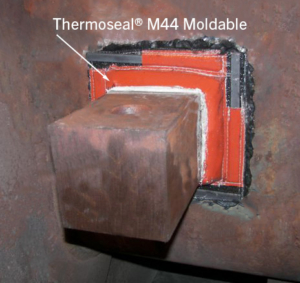
Mid-Mountain Materials, Inc. has worked with high-temperature materials since 1976, supporting industries where sealing performance, thermal control, and material durability directly affect plant reliability. Our THERMOSEAL® Refractory Moldables suit a range of primary aluminum smelting applications, including cathode bar sealing, refractory repair, molten metal transfer, and other demanding potline uses. Pumpable, dry, and non-wetting grades also match specific service conditions and installation methods.
Planning a cathode bar seal, refractory repair, or molten metal transfer application? Contact Mid-Mountain Materials, Inc. to discuss operating conditions and material requirements with our team.